
A garage door spring can fail without giving a useful warning. The sound may be a sharp bang, or the first sign may be a door that suddenly feels too heavy for the opener. The safest response is to stop movement, keep the opening clear and describe what happened without touching the loaded hardware.
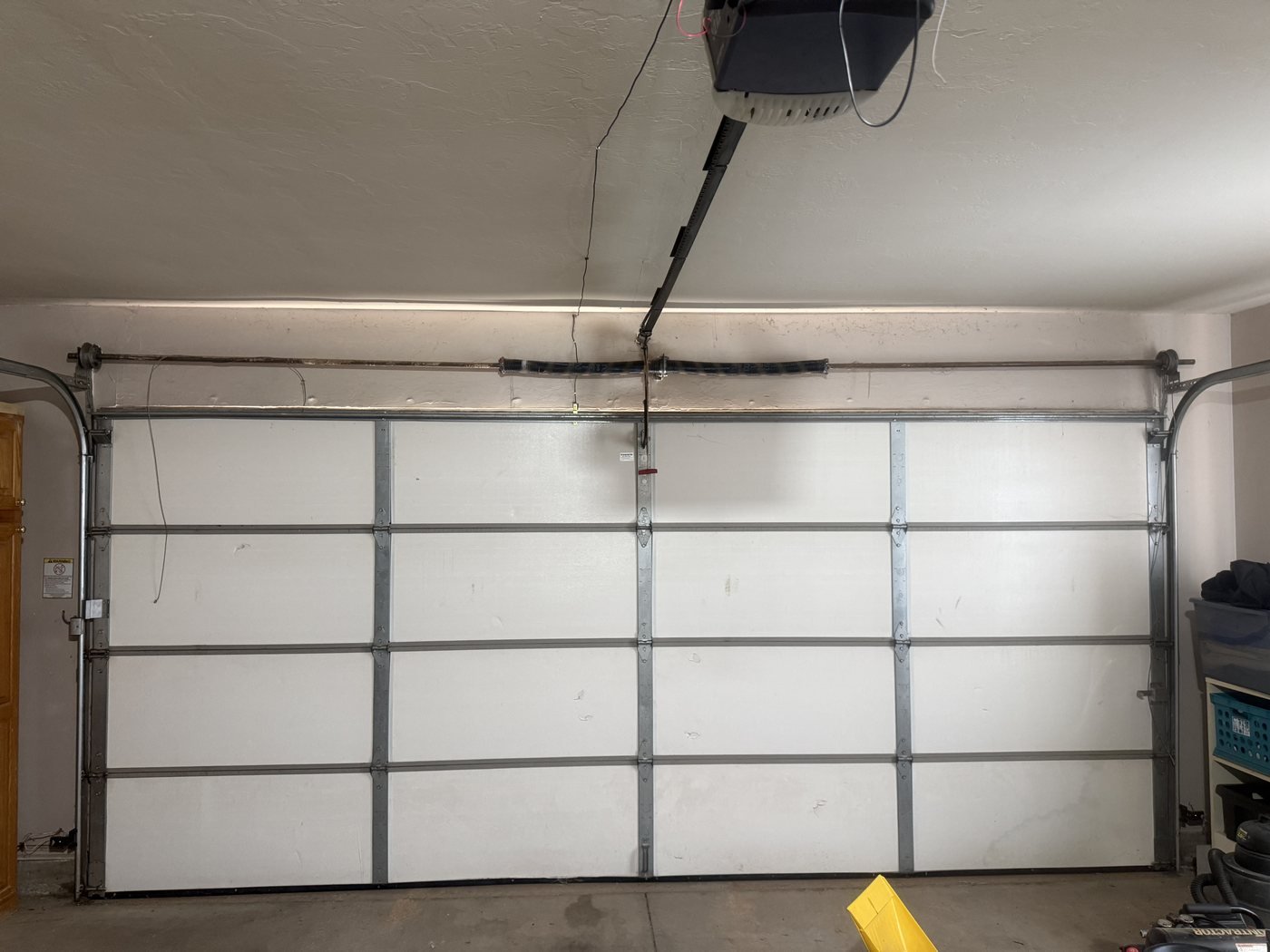
Do these five things first
- Stop using the opener. Repeated attempts can place more strain on the motor, top section and door hardware when the spring is no longer supporting the expected weight.
- Keep people, pets and vehicles away. Do not stand beneath a partly open door or cross through an opening that is crooked, moving unexpectedly or supported unevenly.
- Leave the door where it is. Do not try to force it closed or lift it with several people. A heavy door can move faster than expected once it starts.
- Do not touch the spring, cables, drums or bottom fixtures. These parts belong to the counterbalance system and can remain under substantial force.
- Record the visible symptom from a safe distance. Note whether the door is open or closed, whether one side is lower, what the opener did and whether a gap is visible in a spring.
Signs that can point to lost spring support
A loud sound is not enough to identify the failed part. A professional evaluation should separate a spring failure from cable, drum, track, opener and door-panel problems. Still, several observations are useful when requesting service:
- A visible gap appears within a torsion spring above the door.
- The opener runs but the door rises only a short distance or stops.
- The door feels much heavier than normal or cannot be controlled safely by hand.
- A lift cable appears loose, or one side of the door is lower than the other.
- The top section bends or the opener rail flexes while trying to lift.
- The door was working normally before a sudden bang inside the garage.
These observations help describe the condition; they do not authorize continued testing. A loose cable may be a result of lost spring support rather than a separate cable-only failure. A crooked door may also have a roller or track condition that needs to be secured before the spring system is evaluated.
If a vehicle is trapped inside
Do not turn the situation into a lifting experiment. Share the door position, vehicle clearance and available pedestrian access when you call. If the door is fully closed and stable, keep it closed until the system can be inspected. If it is partly open or uneven, keep everyone out of the travel area and explain that the opening cannot be secured safely.
Ronnie’s accepts spring-service and urgent repair requests in Boulder and nearby communities during the posted daily hours of 7:00 AM to 9:00 PM. Availability and the safe service sequence depend on the door position and condition reported.
What a professional spring evaluation should include
- Secure the door and work area before loaded components are handled.
- Confirm whether the system uses torsion springs, extension springs or another counterbalance arrangement.
- Inspect the shaft, bearings, spring anchors, cables, drums, bottom fixtures and nearby track hardware.
- Identify the door configuration and the information needed to select compatible replacement springs.
- Check for secondary damage caused by attempted operation, uneven loading or a loose cable.
- Evaluate door balance and controlled travel before reconnecting and testing the opener.
- Verify opener travel, photo eyes and automatic reversal after the mechanical door moves correctly.
The repair decision should be based on the complete door, not spring color or appearance alone. Door dimensions, construction, weight, hardware and the installed spring system all contribute to correct part selection. The Boulder garage door spring replacement page explains the service path in more detail.
Information to provide before the visit
- The current door position: fully closed, partly open, fully open or crooked.
- Whether the opening can be avoided and secured without moving the door.
- What you heard and what happened on the next opener attempt, if one occurred.
- Wide photos of the inside of the complete opening, taken without standing under the door.
- The opener brand and model if its label is visible without removing a cover.
- Any recent impact, cable problem, track issue or change in door movement.
For additional industry reference, the Door & Access Systems Manufacturers Association publishes technical data sheets for door and access systems, including spring-cycle and inspection information. Product-specific instructions still control the exact parts and procedures for an individual system.
Can I open a garage door with a broken spring?
Do not treat the door as safe to lift. Lost spring support can make the door unexpectedly heavy, and an open or crooked door can move without warning. Keep the area clear and have the position evaluated before movement is attempted.
Should both springs be evaluated when one breaks?
Yes. The complete counterbalance system, door configuration and remaining hardware should be documented before the repair options are explained. That does not mean every system receives the same parts or scope.
Can the opener hold the door open?
The opener is not a substitute for spring support or a safe way to secure an unstable door. Do not stand or park beneath a door that may be relying on the opener connection.
What if I cannot see a gap in the spring?
A missing visible gap does not rule out a balance, spring, cable, drum or other mechanical problem. Stop testing when the door is heavy, uneven or unable to travel normally.