
A rolling steel door uses a flexible curtain that travels in side guides and coils above the opening instead of moving as connected sections along horizontal tracks. That compact travel path can work well where overhead space must remain available, but the curtain, guides, hood area, operator, controls and surrounding structure still need to be evaluated as one opening.
Related commercial opening photos
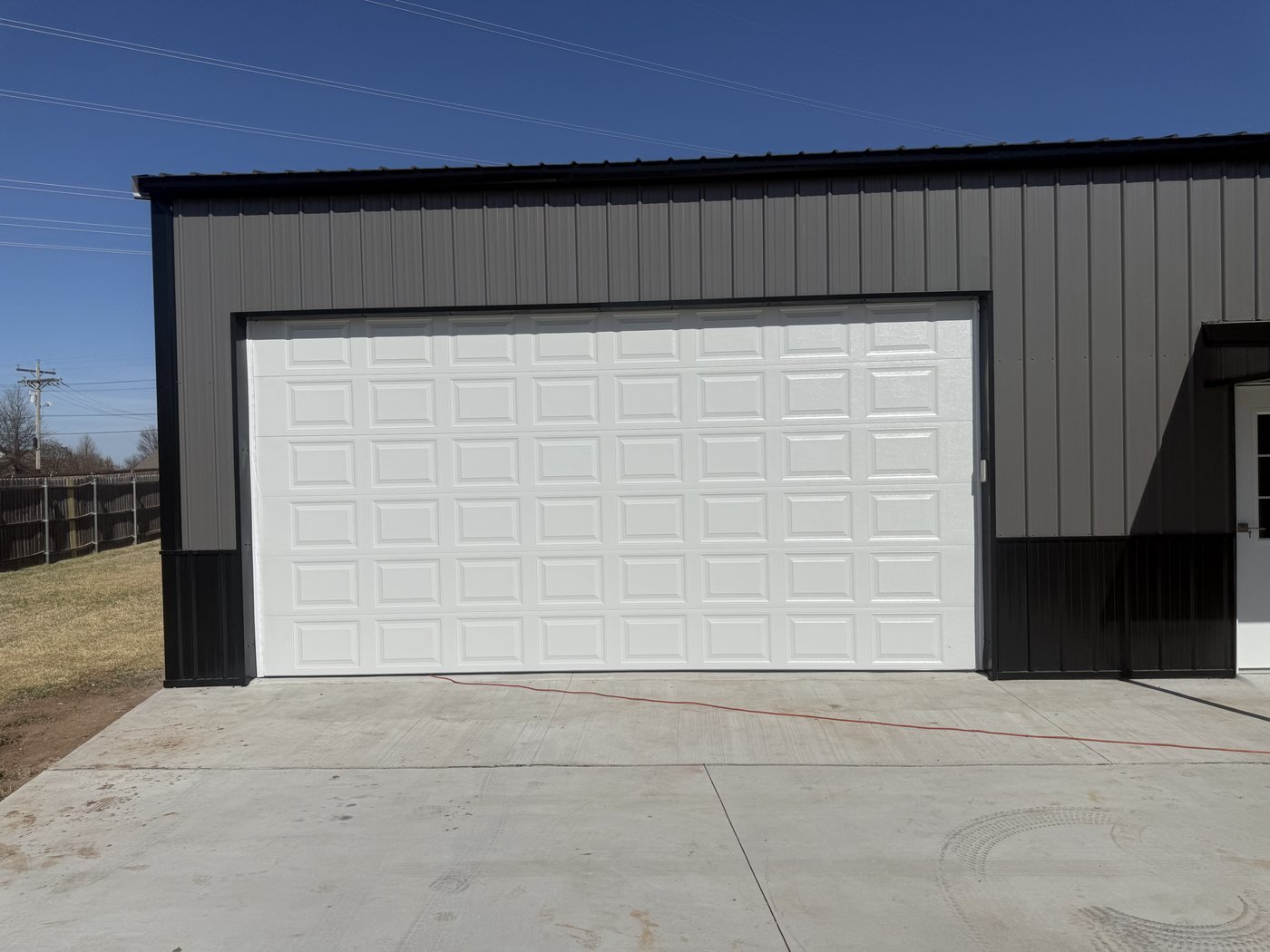
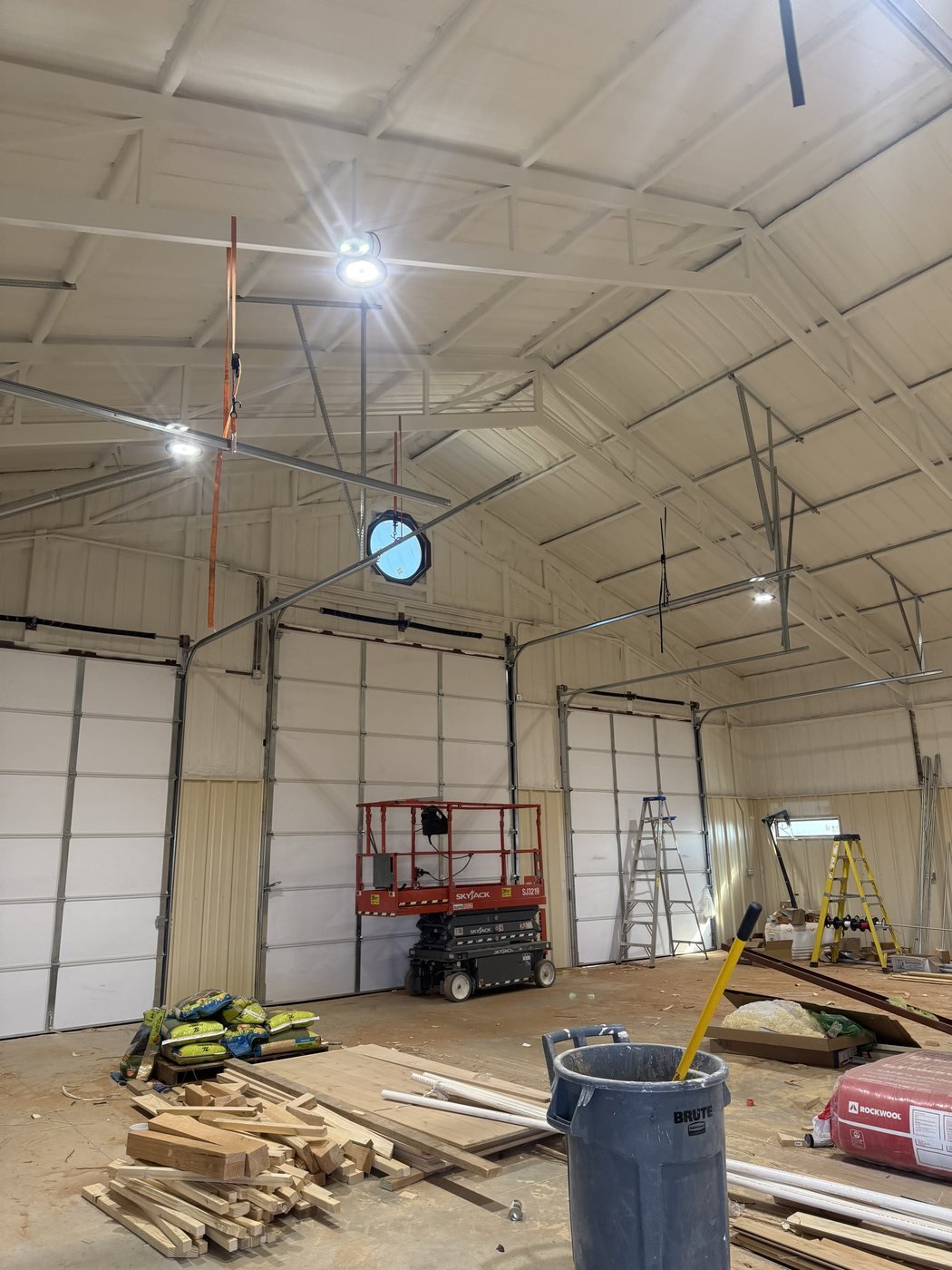
These additional business-owned photos show how structure, interior clearance and door travel can differ across commercial openings. They do not identify the pictured rolling door or prove a shared job location.
The curtain and guides form the visible travel system
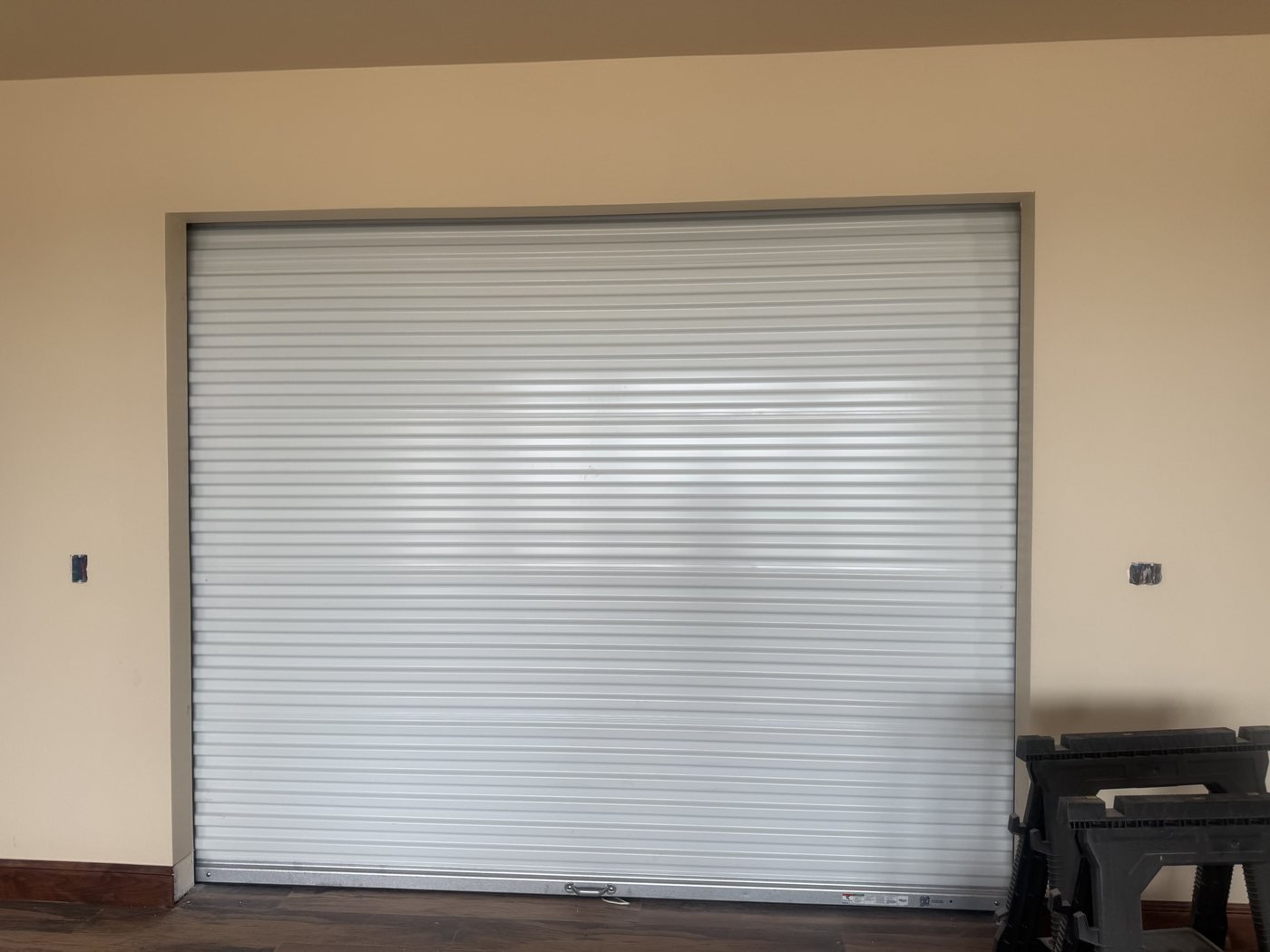
The horizontal slats visible across the opening form a flexible curtain. During operation, the curtain edges travel inside guides on both sides. A useful inspection looks for changed gaps, rubbing marks, displaced slats, bent edges and debris near the guide path without reaching into the moving opening. A closed photo cannot show whether the curtain tracks evenly or whether resistance changes during travel.
Guide alignment and attachment matter because they keep the curtain contained as it moves. The surrounding wall and mounting surfaces should be included in the visual review. Loose-looking fasteners, impact marks or a changed relationship between a guide and the opening should be documented from a safe distance. The exact clearances and adjustment limits must come from the installed product information, not a general photo.
The hood area should not be treated as empty space
The enclosure above a rolling door typically protects the coiled curtain and related barrel-area components. The photo shows the enclosure but not what is inside it. A complete evaluation may need safe access to the hood, supports, bearings, counterbalance components and operator connection. Product records and labels help determine which parts and procedures apply.
Do not remove a hood cover or loosen shaft, spring or support hardware as an owner inspection step. Stored force, door weight and overhead access create risks that are not visible in a closed-door photograph. If the curtain is uneven, hangs in the opening or no longer remains controlled, keep the area clear and stop operation until the opening can be secured.
The sill and opening edges affect closure
The bottom of the curtain meets the floor or sill across the full opening. Uneven concrete, debris, ice, stored material or impact damage can change that meeting point. A gap at the bottom may involve the floor, curtain, bottom bar, guides, stopping position or more than one condition. The cause should be measured rather than inferred from exterior light or a single viewing angle.
- Keep the complete opening and guide area clear before operation.
- Record whether the bottom edge appears level when the door is closed.
- Note fresh scrape marks, changed gaps or slats that no longer align consistently.
- Identify nearby shelving, vehicles, piping or equipment that may restrict service access.
- Protect controls from unintended use while an abnormal condition is being documented.
Door movement and powered controls need separate checks
A wall station, key control, remote device or automatic system may command the door, but the control does not explain why movement changed. The inspection should distinguish a control or power issue from resistance in the curtain, guides, barrel area or bottom edge. Repeatedly commanding a stalled or uneven door can increase damage even when the operator still responds.
Record which control was used, whether the operator made sound, where travel changed and whether an indicator appeared. Also note whether the condition happens in one direction or both. Do not bypass installed protective devices or increase settings to force movement. Ronnie’s commercial garage door service page explains how mechanical door condition and powered operation are separated during service planning.
Service access is part of the estimate
The visible opening sits within an active interior area. Before a commercial service visit, the property should identify when the doorway can be removed from use, how people and vehicles will be routed, and whether stored items can be moved away from both guides and the overhead enclosure. Safe ladder or lift access may depend on ceiling height, floor condition and equipment near the door.
A useful request includes the opening dimensions for initial planning, door position, visible condition, control behavior and any product label that can be photographed without removing a cover. Final measurements, compatible parts and safe access requirements still need to be confirmed at the opening. Use the commercial overhead door checklist to organize those observations.
Repair and replacement are different scope decisions
A focused repair may be considered when the affected component can be identified, compatible parts are available and the remaining system can be returned to controlled operation. A wider repair or replacement comparison may be appropriate when the curtain, guides, supports, operator or opening has multiple conditions, repeated impact damage or compatibility limits. The photo alone cannot select either path.
The written proposal should identify the exact equipment being serviced, which parts are included, how the opening will be secured, what access the property must provide and which final operating checks are part of the approved work. Optional improvements should be separated from work required to correct the documented condition.
Final checks should match the installed system
- Observe controlled curtain travel through both guides without scraping, jumping or visible skew.
- Confirm that the bottom edge reaches its intended closed position without being forced into the sill.
- Verify that hood, guide and operator supports remain secure after approved work.
- Test installed controls, stopping behavior and protective devices according to the equipment instructions.
- Confirm that the opening can be secured and that authorized users understand normal controls and shutdown steps.
- Record the service scope and final observations under the identifier for this specific door.
Is a rolling steel door the same as a sectional overhead door?
No. A rolling curtain coils above the opening, while a sectional door moves connected panels through tracks. The components, clearances and service procedures should be identified for the installed system.
Can the door model or rating be identified from this photo?
No. Similar-looking curtains can have different construction, controls and intended uses. Product labels and manufacturer records are needed for model-specific parts, ratings and instructions.
What should be reported when a rolling door stops?
Provide the door position, direction of travel, control used, operator response, visible curtain alignment, new sounds, recent impact and whether the opening can be secured without more operation.
Should the operator be replaced when the curtain moves slowly?
Not automatically. Guide resistance, curtain condition, counterbalance components, controls, power and the operator can each affect movement. The mechanical and powered systems should be evaluated separately.