
When a commercial garage door will not open, the first priority is not forcing another cycle. The useful response is to control the traffic area, document what changed, protect the opening, and separate the mechanical door from the operator and controls before a repair decision is made.
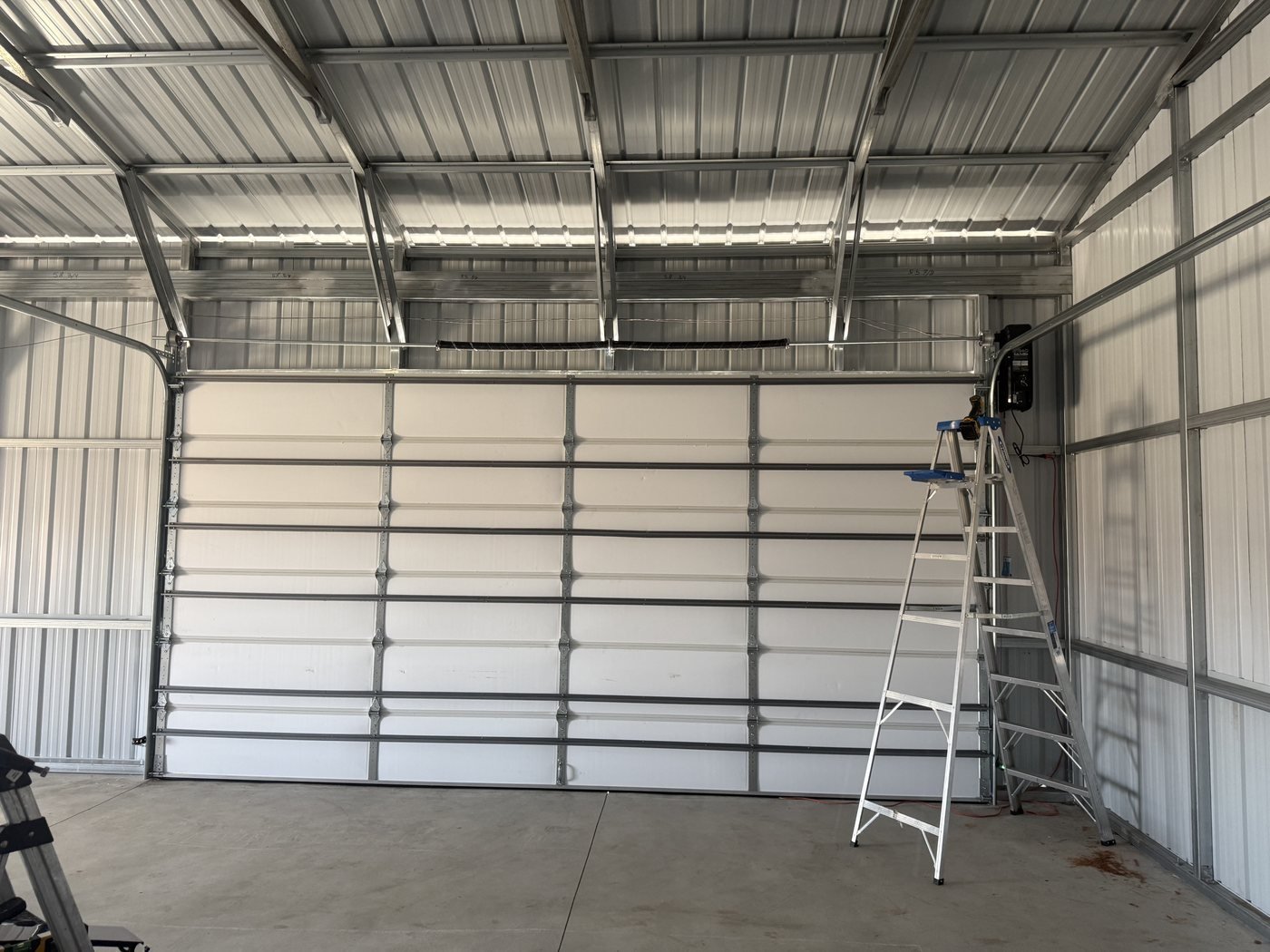
Control the opening before troubleshooting the commercial door
A door that is stuck closed can interrupt deliveries, vehicles, waste removal or normal building access. A door that is stuck partly open creates a different problem because the opening may affect security while the door remains overhead. In either case, the facility response should begin with people and traffic rather than another remote command.
- Keep employees, customers, vehicles, carts and lifts outside the door travel path.
- Use the facility’s established access-control, traffic and shutdown procedures for the affected opening.
- Identify a different entrance or work sequence when one is available instead of forcing the door.
- Prevent unintended operation from wall stations, remotes, keypads, vehicle controls or connected systems according to the site procedure.
- Record whether the door is fully closed, partly open, fully open, tilted or visibly unsupported.
Use the response to identify which system stopped working
A failed command does not automatically mean the commercial operator needs replacement. The visible response helps a service team plan the right inspection without treating one symptom as a diagnosis.
No response from any control
Record whether the operator has visible power, indicator lights or a fault display. Note which controls were tried, but do not remove electrical covers, probe wiring or bypass a control circuit.
The operator responds but the door does not move
Clicks, humming, drive movement or a changing display can narrow the symptom. They do not prove that the operator is the failed part because a heavy, locked, binding or unsupported door can prevent movement.
The door starts and stops
Document the travel direction, stopping point, sound and whether the door remains level. Resistance in the door, an obstruction, a control or protective-device condition, or an operator setting may produce different versions of this symptom.
One side moves differently
Stop operation when the door tilts, a cable appears loose, a roller leaves the track or a section edge shifts. Repeated powered cycles can extend damage into connected track, section, cable or operator components.
Details to record before commercial overhead door service
Useful information reduces guesswork and helps the facility explain access restrictions before a technician arrives. It should be collected from outside the travel path without touching loaded hardware.
- Opening identifier: use the bay, dock or door number used in the facility records.
- Current position: closed, partly open, open, tilted or resting against an obstruction.
- Last successful cycle: note the approximate time and whether the condition began after an impact, power interruption or unusual sound.
- Control used: wall station, pull cord, remote, keypad, vehicle control, timer or connected access system.
- Operator response: silence, click, hum, movement, flashing light, displayed code or another visible indicator.
- Door movement: direction, stopping point, shaking, scraping, uneven travel or uncontrolled motion.
- Visible condition: displaced roller, loose cable, damaged section, changed track position or affected protective device.
- Operational impact: deliveries, vehicle movement, security, employee access and the times when the opening can remain unavailable.
Wide photos can show the complete position of the door, nearby equipment and safe service access. Close photos may help identify a visible label or damaged area when they can be taken from the floor. Photos cannot establish spring force, door balance, hidden attachment damage or safe manual operation.
Why bypassing controls can create a second problem
A commercial operator may be connected to wall controls, external monitored entrapment protection, sensing edges, photoelectric devices, access controls or building-specific logic. Holding a control, bridging wiring, changing a limit or increasing force without the exact operator instructions can hide the original symptom and change how the closing cycle behaves.
DASMA Technical Data Sheet 375 explains that motor-operated commercial sectional and rolling door installations require coordination among the door, operator and electrical work, and that the specific operator manufacturer instructions must be followed. The commercial operator installation guidance is useful context for why a control symptom should not be separated from the complete installed system.
Manual operation is not a universal workaround
Some commercial systems include a manual chain, release or hoist arrangement, but the presence of that equipment does not prove the door is safe to move. Manual operation depends on the exact door and operator, the door position, the condition of its counterbalance and hardware, manufacturer instructions, and the facility’s trained operating procedure.
Do not use a manual mechanism to overcome resistance, move a crooked door or test damaged spring-and-cable hardware. A public OSHA accident record involving overhead-door spring adjustment documents the serious consequences of released stored energy. The record does not diagnose the pictured door or create one maintenance rule for every facility; it illustrates why loaded spring and shaft adjustments are not general troubleshooting steps.
What a professional diagnosis should separate
- Establish the work zone, control access and determine how the opening can be secured.
- Identify the door, operator, controls, protective devices and available manufacturer information.
- Inspect sections, hinges, rollers, tracks, brackets, supports and attachment points for impact, displacement and resistance.
- Inspect cables, drums, shafts, bearings, springs and bottom fixtures without loosening loaded components.
- Evaluate manual door balance and free movement only after the door can be placed in a controlled test condition.
- Inspect the operator-to-door connection, drive arrangement, limits, controls, wiring and diagnostic indicators.
- Test installed monitored or reversing devices according to the exact operator instructions after approved repairs.
- Document the cause, immediate repair, deferred wear items and final operating checks for that specific opening.
Repair or replacement depends on the connected damage
A focused repair may be appropriate when the failed component can be identified, compatible parts are available, the sections and attachments remain serviceable, and the complete system can be returned to controlled operation. A broader repair or replacement comparison may be needed after impact damage, repeated failures, torn section attachments, bent tracks, obsolete controls or several connected component problems.
Downtime also affects the service plan. A facility should explain whether the opening serves deliveries, fleet traffic, waste handling, security or another critical process. That information helps sequence access and estimate planning, but it does not justify operating an unstable door.
Ronnie’s provides commercial garage door repair in Boulder and nearby communities during posted daily hours. Share the door identifier, current position, visible symptom, operator information and access impact when requesting an evaluation.
Why does the commercial operator run but the door stay closed?
The door may be locked, heavy, binding or disconnected, or the drive and operator-to-door connection may be involved. Stop repeated cycles and have the mechanical door and powered operator evaluated separately.
Can employees use the manual chain when the door will not open?
Only the exact manufacturer instructions and the facility’s trained procedure can define safe manual operation. Do not use a chain or release to force a crooked, resistant, unsupported or visibly damaged door.
What if the commercial door is stuck open?
Keep the area beneath the door clear, prevent unintended operation, follow the site’s security and traffic procedures, and explain the door position when requesting service. Do not stand beneath it or attempt spring, cable, shaft or bottom-fixture adjustments.
Should the operator be replaced when no control works?
Not automatically. Power, wall controls, wiring, protective devices, access controls, the operator and the mechanical door can each affect the response. Model-specific diagnosis should come before replacement.