
A commercial overhead door inspection works best when daily observations and professional service checks are kept separate. Employees can document visible changes and control the traffic area; trained service personnel can evaluate balance, loaded hardware, controls and the causes behind abnormal movement.
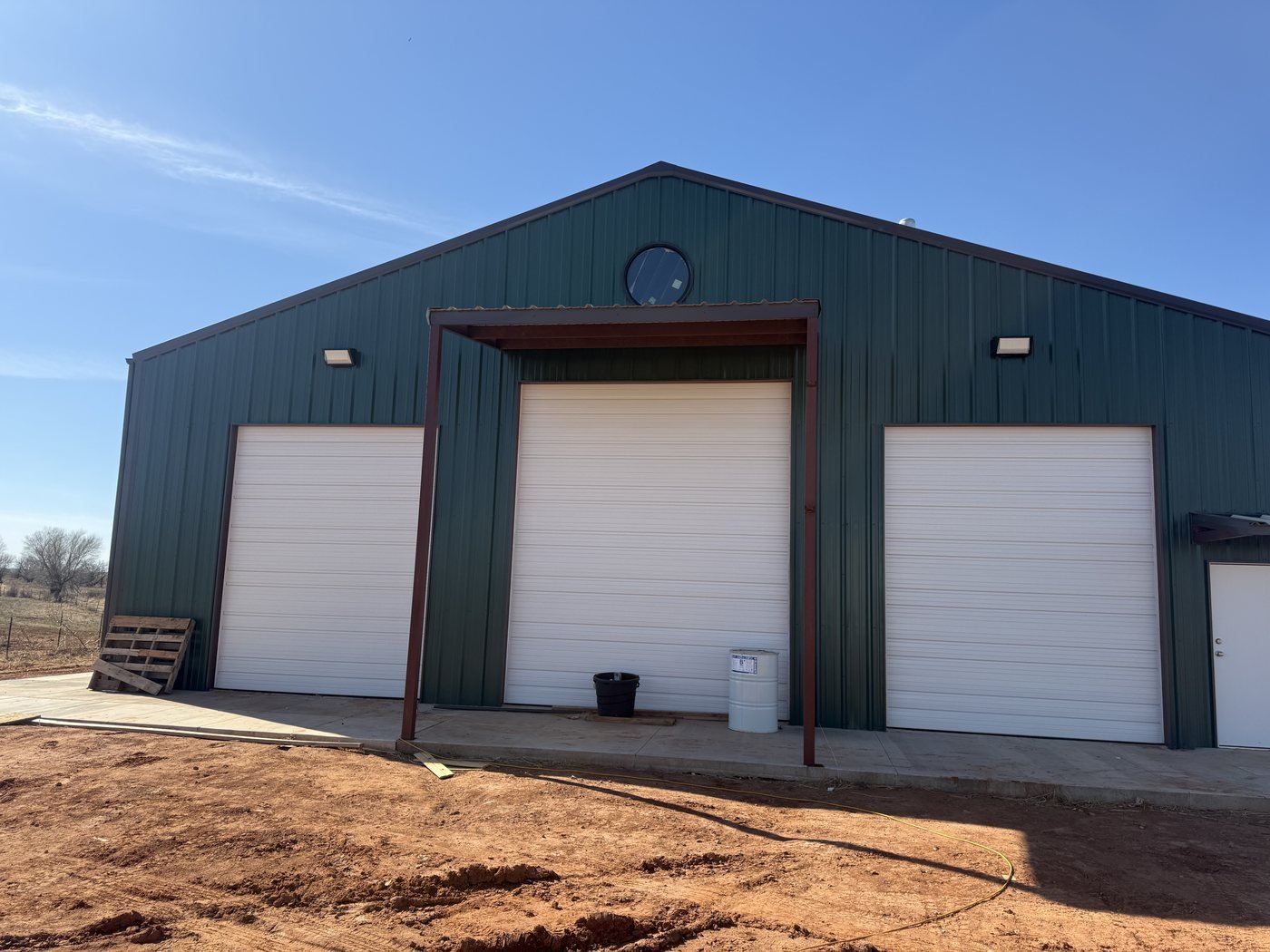
Start-of-shift observation checklist
A brief observation should happen without entering the travel path, touching loaded hardware or operating a door that already appears damaged. The goal is to identify a change early and create a useful record.
- Opening and traffic area: keep people, vehicles, stored materials and equipment clear of the door path.
- Door position: note whether the door is level, fully open or fully closed and whether either side appears lower.
- Sections or curtain: look for impact damage, folded edges, separation, cracked glazing or a changed gap around the opening.
- Tracks and guides: observe visible bends, loose-looking supports, debris or contact marks without reaching into the track.
- Cables and lower fixtures: if a cable appears loose, frayed or displaced, stop use and keep clear rather than touching it.
- Controls: confirm that wall stations, pull cords, remotes or access controls are identified and protected from unintended use.
- Change in movement: record new noise, hesitation, shaking, uneven speed, reversal or failure to stop where expected.
Operator and safety-control observations
Powered operation should be observed only when the opening is clear and no visible condition already requires shutdown. Record which control was used, where the door changed behavior and whether an indicator or fault code appeared. Do not bypass a monitored device, hold a control to defeat normal operation or increase force to move a binding door.
- Does the door respond consistently to the intended control?
- Do visible photo eyes, sensing edges or other installed devices remain secured and unobstructed?
- Does the door stop or reverse when the installed system is tested according to its manufacturer instructions?
- Does the operator, chain, rail or wall-mounted connection show unusual movement?
- Can the opening be secured if powered operation is unavailable?
An OSHA public enforcement record documents a struck-by hazard involving powered overhead doors without working protective devices. It illustrates why the travel area and installed safety controls belong in the inspection plan; it does not set one universal service interval for every door.
Professional mechanical inspection checklist
The professional portion should follow the exact door, operator and manufacturer information available at the site. It should also account for building access and any site-specific safety program.
- Identify the door type, opening dimensions, operator, controls and available equipment records.
- Secure the opening and establish the work zone before inspecting components near the travel path.
- Inspect sections or curtain, hinges, rollers, guides, tracks, brackets, supports and attachment points.
- Review shafts, bearings, springs, cables, drums, bottom fixtures and counterbalance condition without loosening loaded parts.
- Evaluate manual door balance and resistance separately from operator force when the system can be placed in a safe test condition.
- Inspect the operator-to-door connection, controls, wiring and installed protective devices.
- Separate immediate safety work, failed-part repair, planned wear items and optional improvements in the written findings.
- After approved work, verify controlled travel, stopping positions, safety-device response and secure operation.
Set frequency from evidence, not a generic calendar
There is no single interval in this checklist that fits every commercial opening. The schedule should reflect manufacturer instructions, door and operator type, cycle volume, environment, impact exposure, prior findings and the property’s safety procedures. A high-use loading entrance may need more frequent observation than a door that moves occasionally, but usage alone does not identify the failed part.
Keep a record for each opening rather than one note for the entire building. Use a door identifier, date, observer, position, symptom, control used, photo reference, shutdown decision and follow-up status. Comparing records over time makes it easier to distinguish a recurring condition from a one-time obstruction or impact.
How to prioritize the findings
Stop and secure
Use for a crooked or falling door, loose cable, displaced roller, visible spring-area damage, failed stopping behavior, uncontrolled movement or an opening that cannot protect traffic and property.
Plan and monitor
Use for non-urgent wear or changes that do not make continued operation unsafe, provided the manufacturer instructions and site procedure allow use until scheduled service.
Ronnie’s provides commercial garage door repair in Boulder and nearby communities during posted daily hours. Share the opening identifier, current position, visible condition, operator information and operational impact when requesting service.
Can an employee perform the complete inspection?
Employees can document visible conditions and follow the property’s operating checks when trained and authorized. Loaded spring, cable, shaft and bottom-fixture work, detailed balance checks and electrical or operator diagnosis require the appropriate qualified service process.
How often should a commercial overhead door be inspected?
Use the manufacturer instructions, equipment type, cycle volume, environment, service history and site safety program to set the schedule. Avoid assigning the same interval to every opening without those facts.
Should the operator be replaced when the door moves slowly?
Not automatically. Track resistance, rollers, impact damage, balance, controls, power and the operator can each affect movement. Mechanical door condition and powered operation should be evaluated separately.
What should be included in a service request?
Provide the door identifier, current position, visible damage, new sound or movement, control used, operator indicators, recent impact and how shutdown affects deliveries, security or access.