
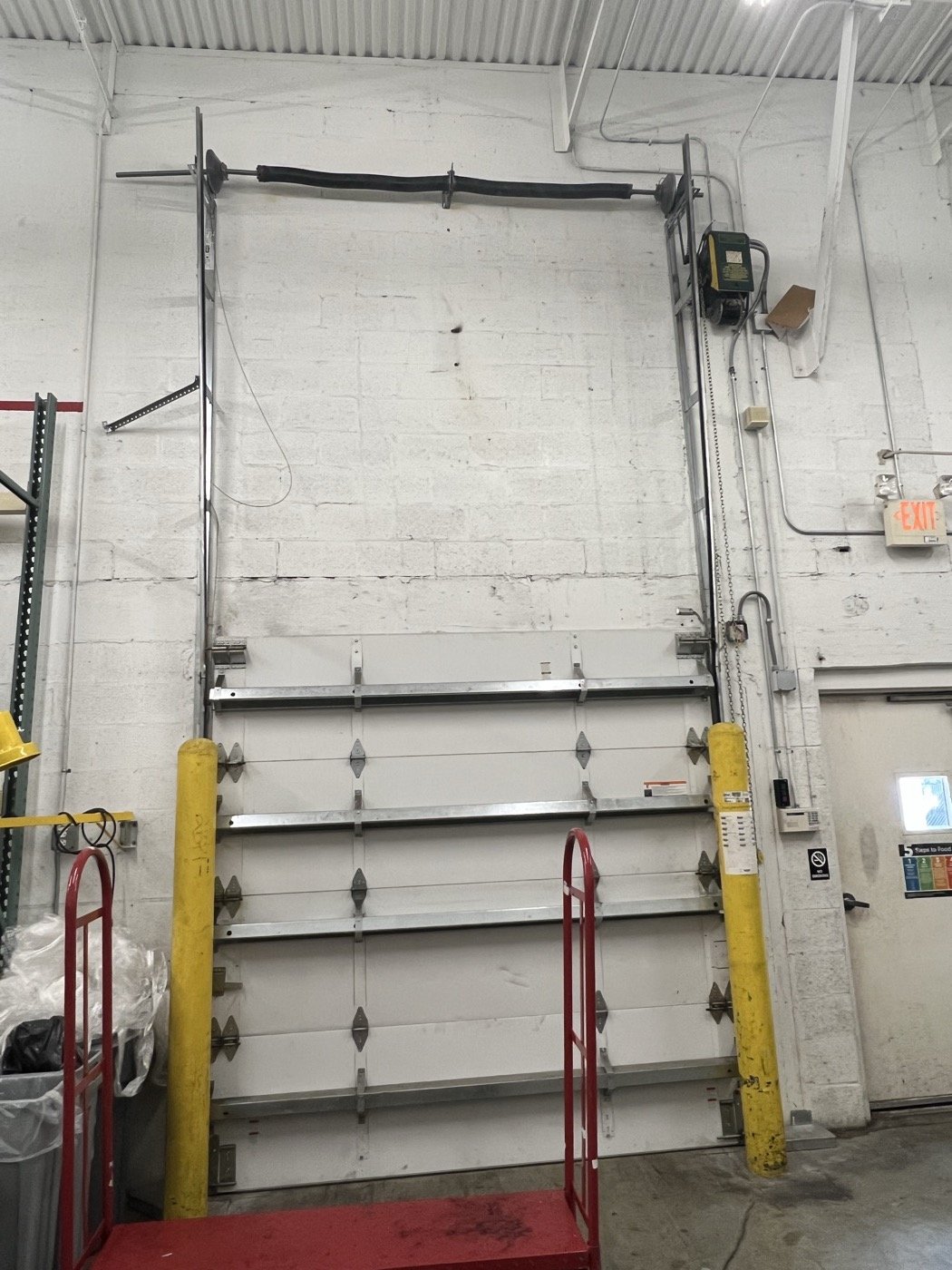
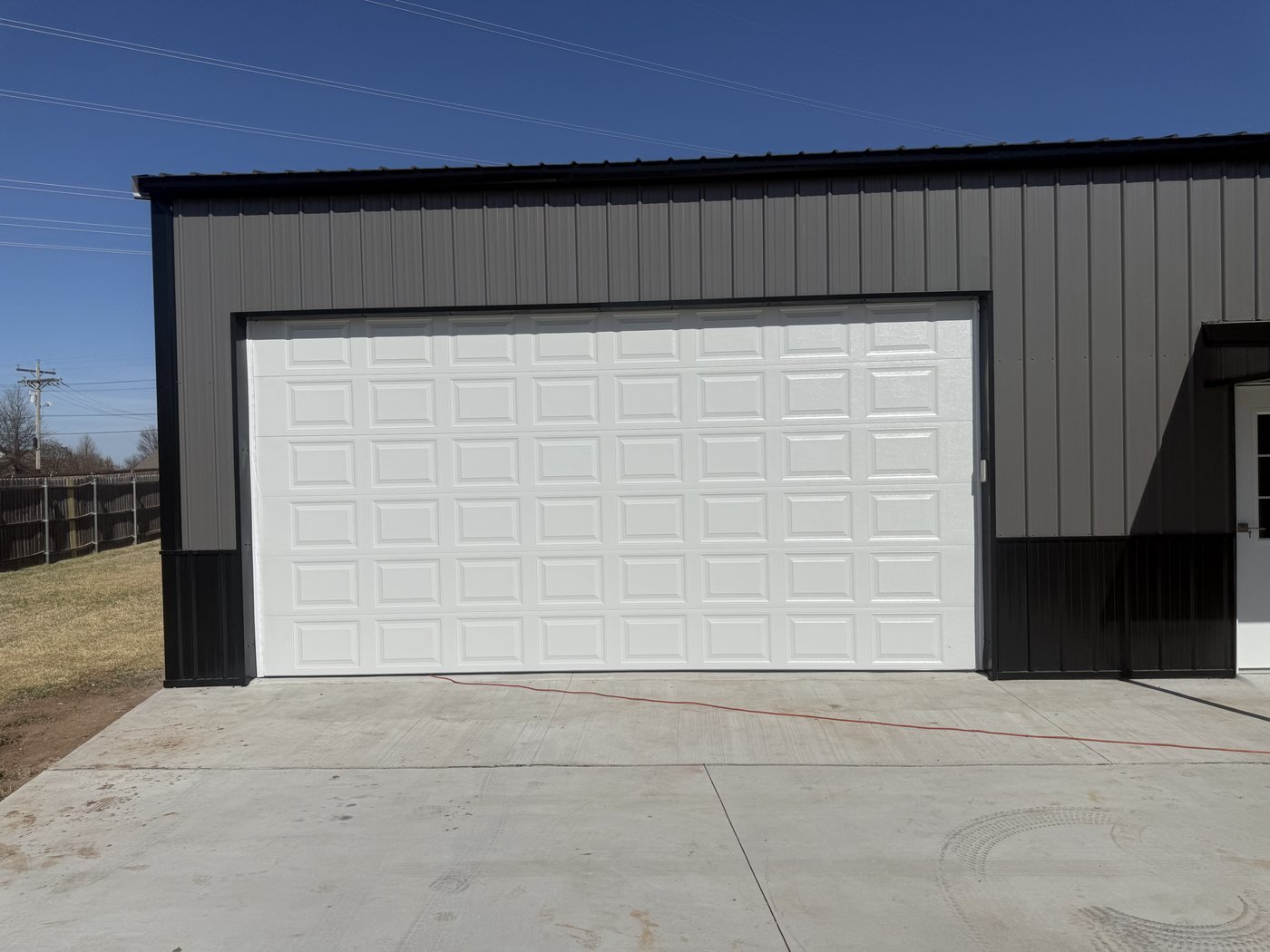
A commercial overhead door must be evaluated as access equipment, a moving door and part of the property workflow. The track geometry, counterbalance hardware, operator, controls and clear area around the opening all affect how the system can be inspected and serviced. This project photo helps identify those planning zones.
More commercial door configurations from real projects
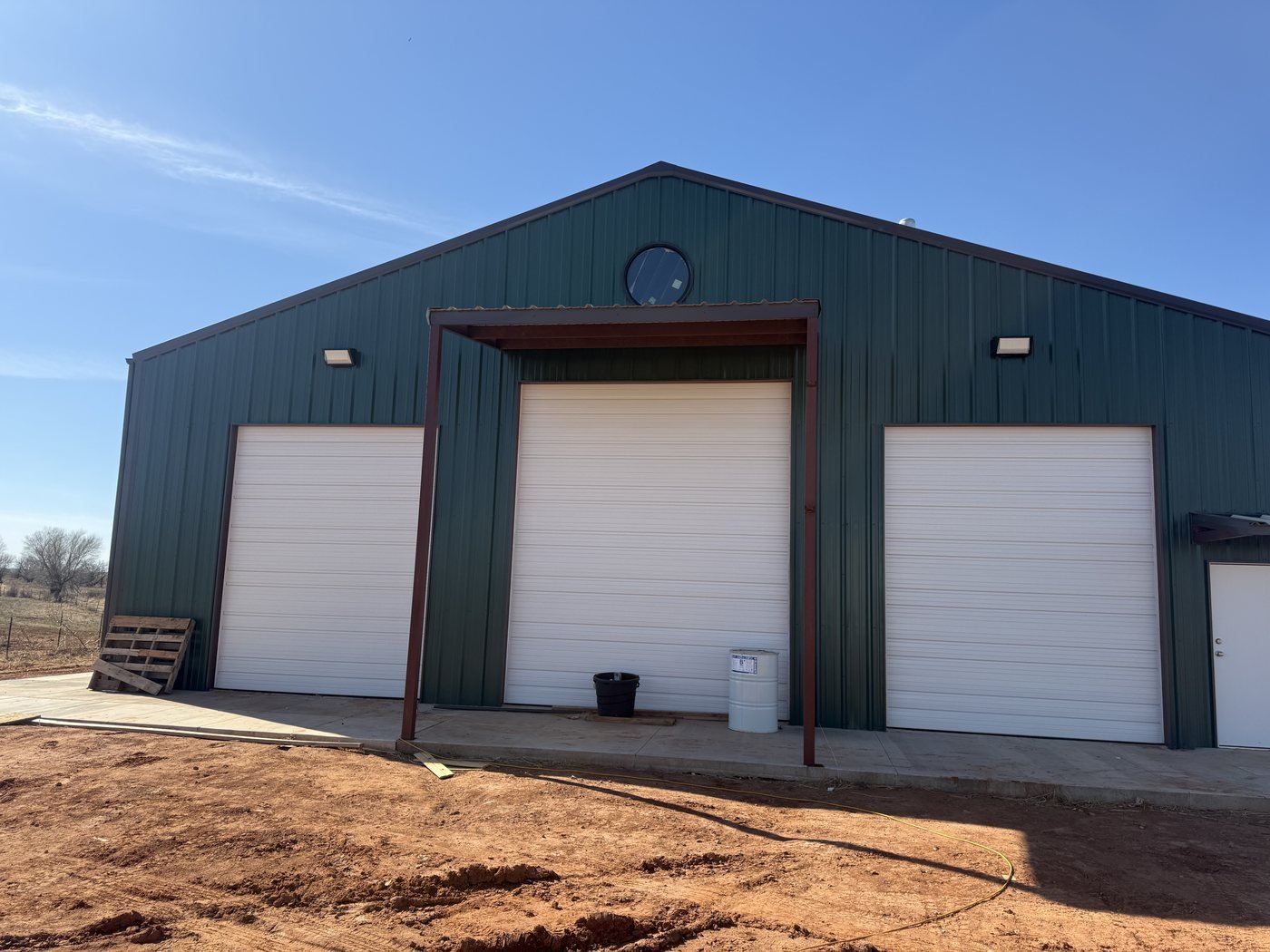
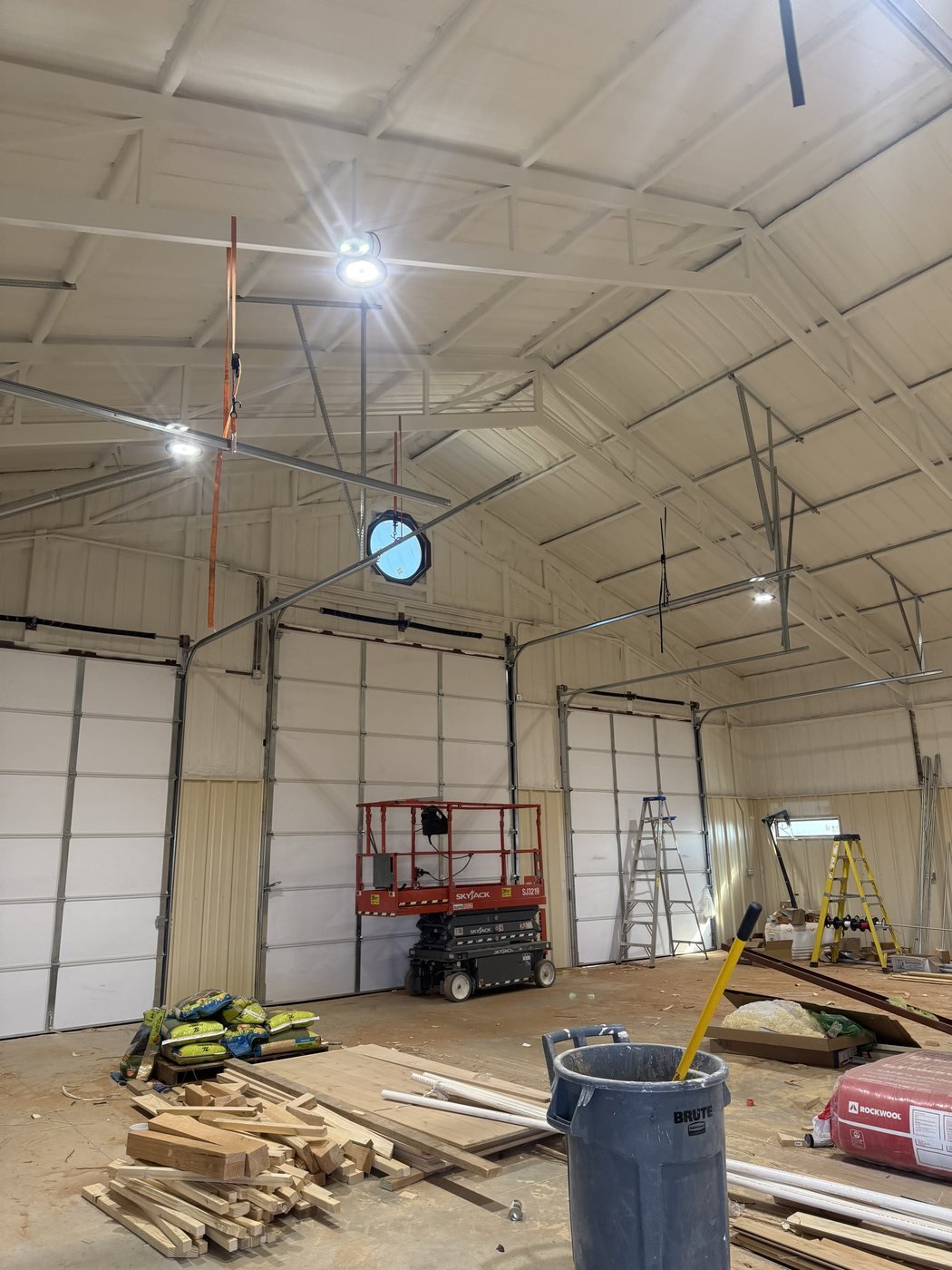
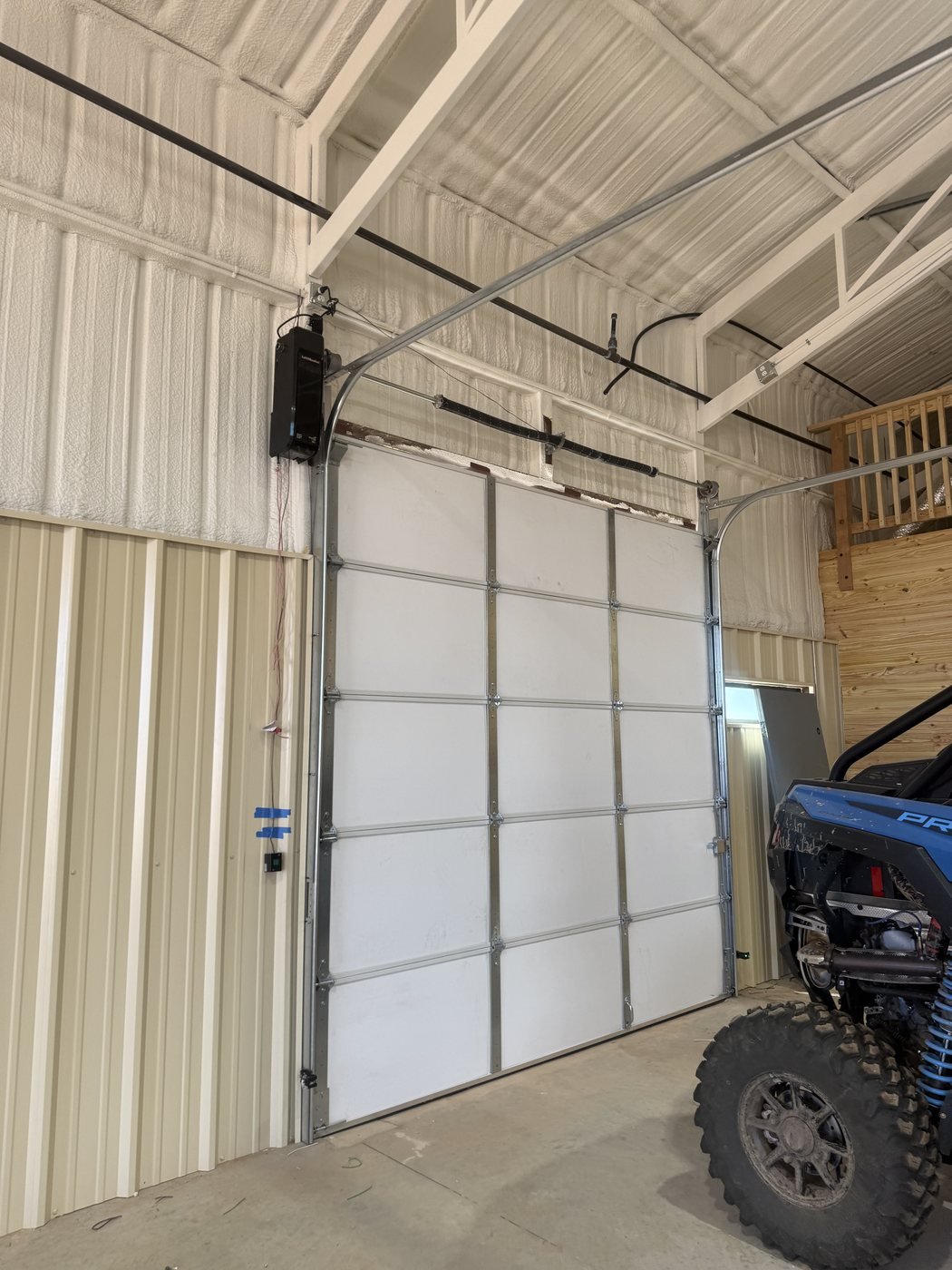
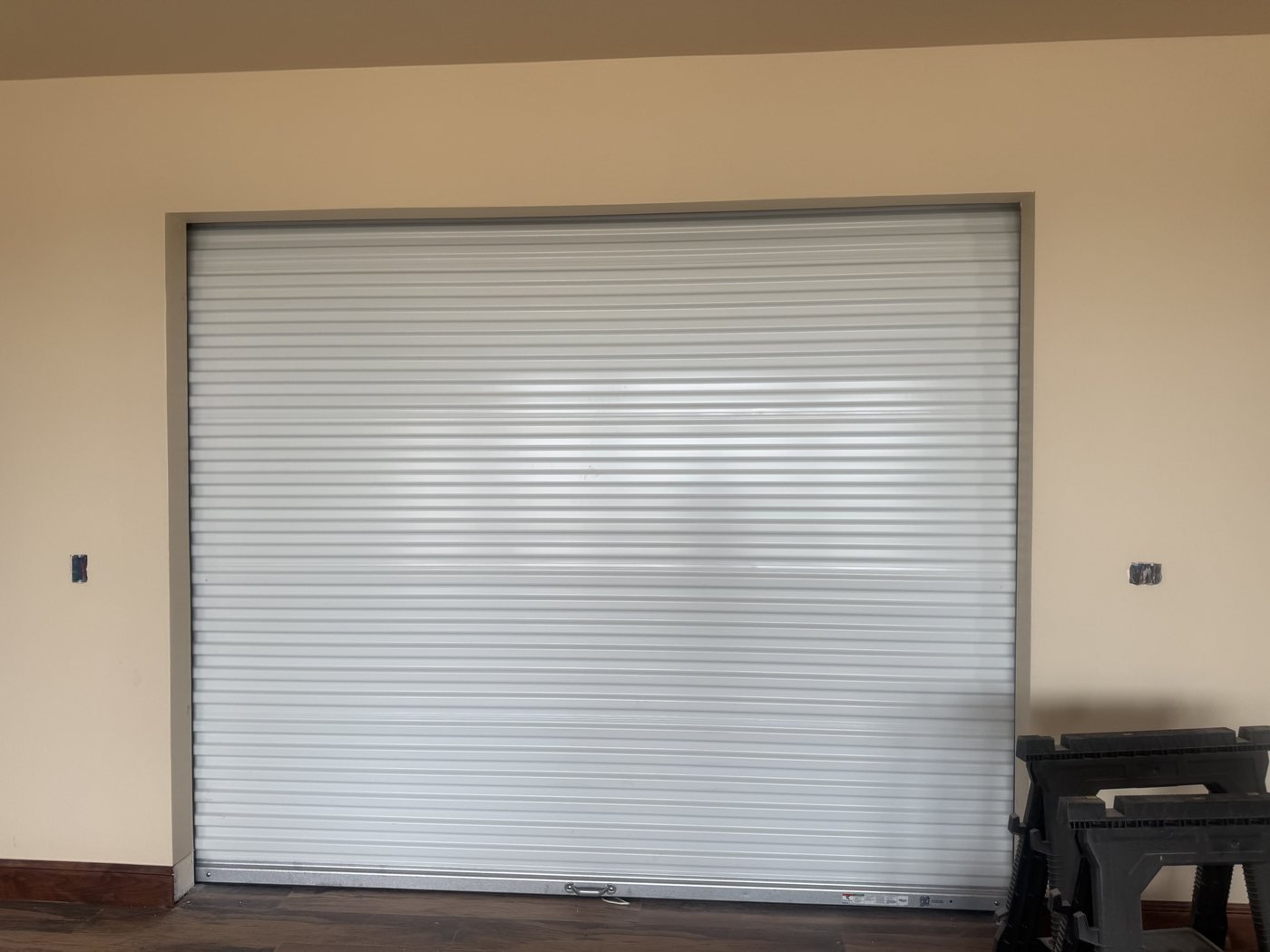
The photos show multiple openings, tall interior clearances, sectional track arrangements and a rolling steel curtain. Each system requires measurements and equipment records before service scope is selected.
Track geometry determines where the sections travel
The image shows sectional panels rising through tall vertical track before transitioning overhead. Commercial buildings may use standard lift, high lift or other track arrangements to work around ceiling height, equipment and the intended clear opening. The exact configuration should be measured rather than identified from one camera angle.
Track supports, brackets, fasteners, rollers and hinges should be checked together. A loose support or damaged roller can change section movement and load other components. Marks, unusual gaps or changing noise can help direct the inspection, but the door must remain controlled before loaded hardware is touched.
Counterbalance hardware and the operator do different jobs
The shaft and spring-area hardware above the opening support the door weight through the cable and drum system. The operator controls powered movement. A working operator should not be expected to compensate for a heavy, binding or uneven door, and replacing an operator will not correct failed counterbalance hardware.
Diagnosis should determine whether the symptom originates in the door, counterbalance system, controls, power supply, operator connection or more than one area. If a spring, cable, drum or bottom fixture appears damaged, the opening should remain out of operation until it is secured. The spring service guide and cable repair guide explain those safety boundaries.
Commercial access changes service planning
Before work begins, the property should identify how the opening is used, when it can be taken out of service and whether another secure access route is available. Vehicles, stored materials, lifts and active work areas may need to be moved so the door and track supports can be reached safely. Control access also matters: wall stations, remotes, key switches or other devices should be identified before operation is tested.
Usage frequency is relevant because wear patterns and operational impact differ from a lightly used residential opening. It does not, by itself, prove which part failed. A useful record notes the symptom, the door position when it occurs, changes in sound or speed, operator indicators and any recent impact or building work near the tracks.
What a commercial overhead-door inspection should cover
- Secure the work area and determine whether the opening can remain safely closed or open.
- Inspect visible sections, hinges, rollers, tracks, supports and attachment points.
- Review spring-area hardware, shafts, bearings, cables, drums and bottom fixtures without loosening loaded parts.
- Evaluate door balance and resistance separately from powered operator behavior.
- Identify controls, safety devices, wiring and the operator-to-door connection.
- Explain urgent repairs, planned wear items and optional improvements as separate decisions.
Repair versus replacement requires system and workflow evidence
A focused repair may be practical when damage or wear is isolated and compatible parts are available. Replacement deserves comparison when sections or tracks have structural damage, recurring failures involve several systems, required parts are unavailable, or the opening and access needs have changed. Operator replacement should be considered separately from door replacement unless compatibility connects the two decisions.
The proposal should identify the exact affected components, what must be taken out of service, how the opening will be secured and which final tests are included. The commercial garage door repair page provides the Boulder service path for this type of evaluation.
Can the commercial track type be confirmed from this photo?
The image shows elevated track travel, but measurements and a complete view are needed to identify the exact lift and hardware configuration.
Does an operator problem mean the door itself is fine?
No. Door balance, rollers, tracks and counterbalance hardware should be evaluated separately because mechanical resistance can create or worsen operator symptoms.
What should a business record before requesting service?
Note the door position, symptom, sound, speed, control used, operator indicators, recent impact and whether the opening can be secured without continued operation.