
Garage door opener troubleshooting is more useful when the symptom is separated into four areas: the door, the powered opener, the safety-sensor circuit and the control used to send the command. A remote, keypad, wall control and motor can produce similar symptoms for different reasons, so begin with observation rather than repeated programming or force adjustments.
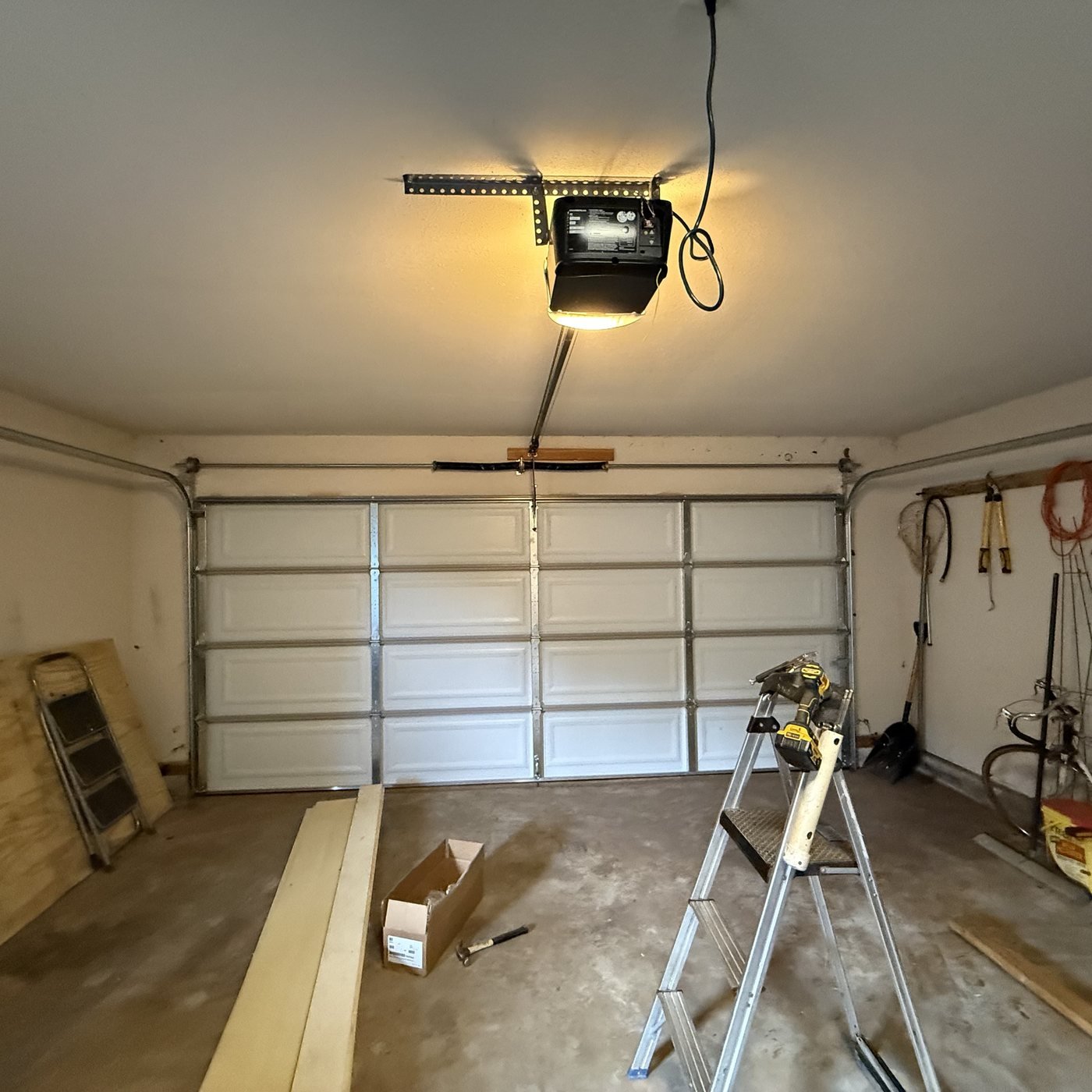
Start by identifying which command fails
No control works
Check the opener indicators and whether another safely accessible device on the same circuit has power. Do not remove the opener cover or perform electrical work. A tripped outlet, disconnected plug, control wiring, motor fault or another condition may require model-specific diagnosis.
Only one control fails
If the wall control works but one remote or keypad does not, the symptom is more likely limited to that accessory, its battery, programming or compatibility. Follow the exact opener and accessory manuals instead of a universal pairing sequence.
The door opens but will not close
Observe the photo-eye area, opener indicators and door path. A blocked or misaligned sensor, damaged low-voltage wire, obstruction, travel issue or mechanical resistance can prevent normal closing.
The motor responds but the door moves badly
Stop if the door is heavy, crooked, off track, scraping or supported by a loose cable or damaged spring. This is a door-system condition, not a reason to increase opener force.
Safe power and wall-control observations
- Confirm that the opener is plugged in only when the plug and outlet are safely accessible from the floor.
- Observe whether opener lights, display indicators or diagnostic codes appear after a command.
- Compare wall-control lock or vacation-mode indicators with the owner’s manual.
- Note whether the wall control is completely unresponsive or whether its light and command behavior changed separately.
- Do not open electrical covers, probe wiring, bypass switches or replace internal components without the correct service process.
A power observation narrows the symptom but does not prove that the motor has failed. The door can also overload a working opener when springs, rollers, tracks or hinges no longer support free movement.
Remote and keypad checks have model-specific limits
Replace an accessible remote or wireless-keypad battery with the type specified by the accessory manufacturer, then note whether the indicator changes. If another programmed control works, record which device fails and at what distance. Do not publish or share a keypad PIN in a service form, photo or public message.
Compatibility cannot be confirmed by appearance alone. Learn-button color, opener model, accessory part number and manufacturing generation can affect pairing. LiftMaster provides a model and compatibility workflow for remotes and keypads; instructions for the installed brand and model should control the actual programming steps.
Photo-eye sensors should never be bypassed
Clear stored items, leaves and debris from the door path and the area around both sensors. A lens can be wiped gently with a soft, dry cloth. From outside the door path, observe whether brackets were bumped, indicator lights differ or low-voltage wire is visibly loose or damaged. Compare the indicator pattern with the exact opener manual.
Do not hold, relocate, bridge or bypass a safety sensor to make the door close. The U.S. Consumer Product Safety Commission explains that residential operators use inherent reversal and external entrapment protection, commonly a photoelectric sensor. Its garage door opener safety guidance recommends repairing or replacing systems that do not reverse properly.
Separate the door from the opener without creating a new hazard
An opener should guide a balanced door; it should not provide the spring force that carries the full door weight. A professional diagnosis evaluates the mechanical door and powered operator separately when the door can first be closed, stabilized and placed in a safe test condition.
Use the broken spring safety guide for a loud bang, visible spring gap or suddenly heavy door, and the off-track safety guide when a roller is displaced or the door is tilted. The existing closing-reversal guide covers the narrower symptom of a door that starts down and returns upward.
What a professional opener diagnosis should document
- Confirm the opener brand, model, controls, accessories and available diagnostic indicators.
- Verify power and wall-control behavior without treating an electrical symptom as a door diagnosis.
- Inspect photo eyes, brackets, low-voltage wiring and the clear path across the opening.
- Check remotes and keypads for compatible batteries, programming and model support.
- Evaluate springs, cables, rollers, tracks, hinges and door balance before changing force or travel settings.
- Inspect the rail, trolley, drive system, door arm and top-section attachment.
- Use the exact manufacturer instructions for travel, force, limits and diagnostic procedures.
- After approved work, confirm controlled travel, photo-eye response and automatic reversal.
Details that make a service request more useful
- Which control fails: wall button, remote, keypad, vehicle control or app.
- Whether the opener is silent, clicks, hums, flashes or moves the trolley.
- Whether the door opens, closes, reverses, stops partway or does not move.
- The opener brand and model from a visible label, without removing a cover.
- Any recent power interruption, impact, spring noise or change in door balance.
- Whether the door is fully closed and can remain out of use safely.
Ronnie’s provides garage door opener repair in Boulder and nearby communities. A focused service decision follows the observed symptom, the condition of the door and the support available for the exact opener model.
Why does the wall button work but the remote does not?
The remote battery, programming, compatibility or the remote itself may be involved. Record whether another remote works and follow the instructions for the exact opener and accessory models.
Why will the door open but not close normally?
Safety-sensor obstruction, alignment or wiring can be involved, but mechanical resistance, travel settings and door condition can create similar behavior. Do not bypass the sensors or increase force before the cause is identified.
Should I reprogram every remote and keypad?
Not as a first step. Identify which controls still work and protect existing access codes. Reprogramming can remove valid devices without correcting a power, receiver, sensor or door problem.
When should troubleshooting stop?
Stop when the door is crooked, off track, heavy, scraping, partly supported, attached to a loose cable or showing spring damage. Also stop when safe external checks do not explain the opener fault or electrical covers would need to be opened.