
When a garage door starts down, stops and returns to the open position, the opener may be responding to a blocked safety sensor, resistance in the door, an obstruction or an incorrect travel setting. The reversal is a symptom; the cause still needs to be identified.
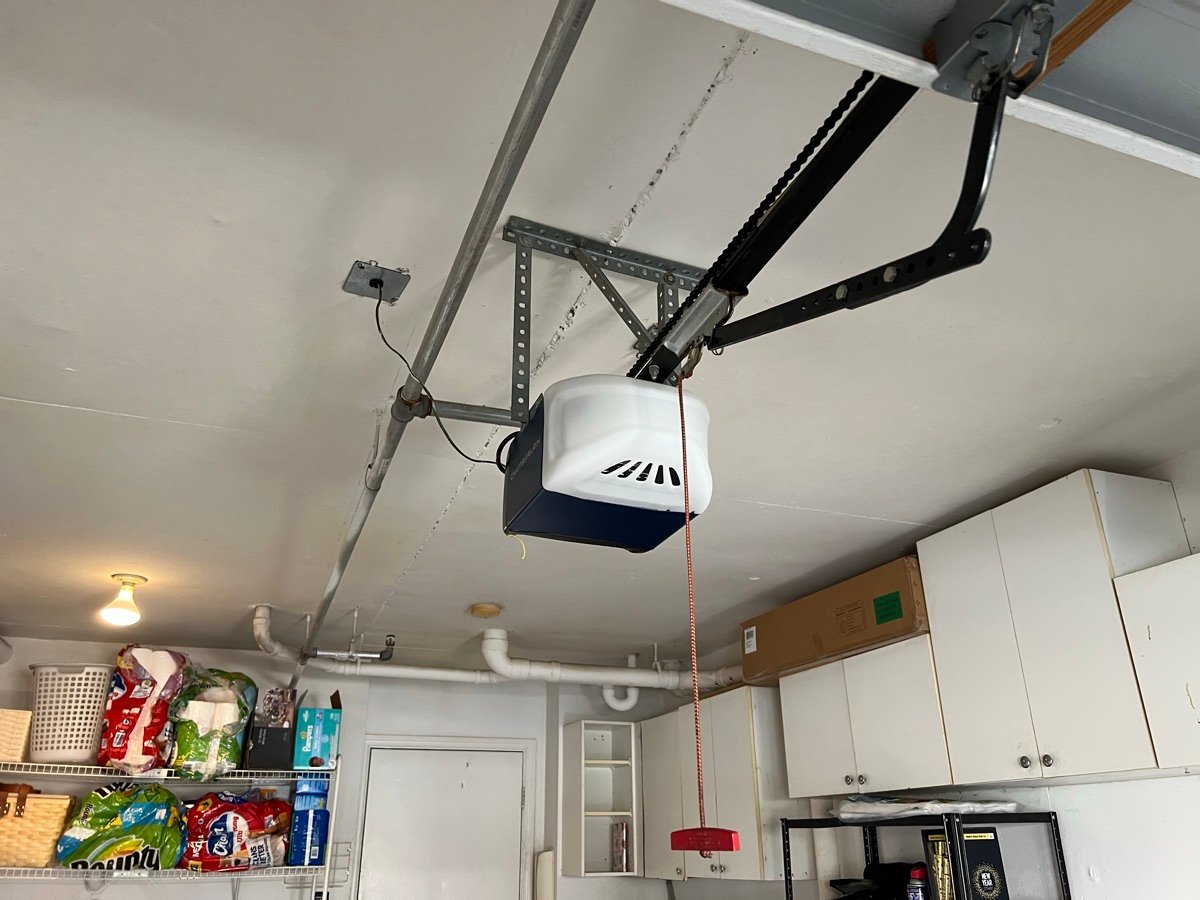
Begin with observations that do not require removing covers or adjusting loaded hardware. Note where the door reverses, whether the opener lights flash, whether the behavior changes at different times, and whether the door looks crooked or unusually heavy.
First check the opening and photo-eye area
Modern automatic openers use photo eyes near the floor to detect an obstruction across the opening. A stored item, dirty lens, loose bracket or interrupted wire can prevent the closing cycle from completing. Bright light can also make an existing alignment or wiring problem easier to notice.
- Remove objects from the doorway and the area around both sensors.
- Wipe the sensor lenses with a soft, dry cloth.
- Look for a sensor bracket that was bumped or a wire that is visibly loose or damaged.
- Observe the indicator lights and compare their behavior with the opener manual.
Do not bypass or relocate the safety sensors to make the door close. They are part of the automatic reversal system.
The door itself may be creating resistance
An opener can reverse even when the controls are working if the door binds in the tracks or becomes harder to move. Worn rollers, track damage, a loose cable, panel deformation or a counterbalance problem can all change the load seen by the opener. Repeatedly increasing force settings can hide the symptom while leaving the mechanical problem in place.
If the door is crooked, a spring has a visible gap, a cable is loose or a roller has left the track, stop operation. Use the urgent garage door repair guide rather than continuing opener tests.
Travel limits can affect the last part of closing
The opener uses travel settings to determine where the floor-level closed position should be. If the setting drives the door too far against the floor, the opener can interpret the resistance as an obstruction and reverse. The correct adjustment method varies by model, so identify the opener and follow its manufacturer instructions instead of guessing.
A changed travel symptom can also be secondary to a door problem. The door should be checked for smooth movement and balance before force or travel settings are used to compensate.
What an opener diagnosis should include
- Inspect the opening, photo eyes, brackets and visible low-voltage wiring.
- Observe the opener lights or diagnostic indicators during the failed closing cycle.
- Check door movement, track condition and balance separately from the motor.
- Confirm the opener rail, trolley and door connection are secure.
- Review travel and force behavior using the instructions for the exact model.
- Test automatic reversal after the mechanical door and opener settings are correct.
Why does the door close only when I hold the wall button?
That behavior often points to the safety-sensor circuit or alignment, but the exact indicator pattern and opener model should be checked before a repair is chosen.
Should I increase the opener force?
Not as a first step. Extra force can mask track, roller, balance or obstruction problems. The door should move correctly before settings are changed.
When should I request opener repair?
Schedule diagnosis when basic obstruction and lens checks do not solve the problem, wiring is damaged, indicators show a fault, or the door has a mechanical movement problem.