
Insulation is one part of a garage door system, not a stand-alone promise about comfort or energy use. Panel construction, perimeter seals, door fit, windows and the wall shared with the home all influence what an insulated door can change.
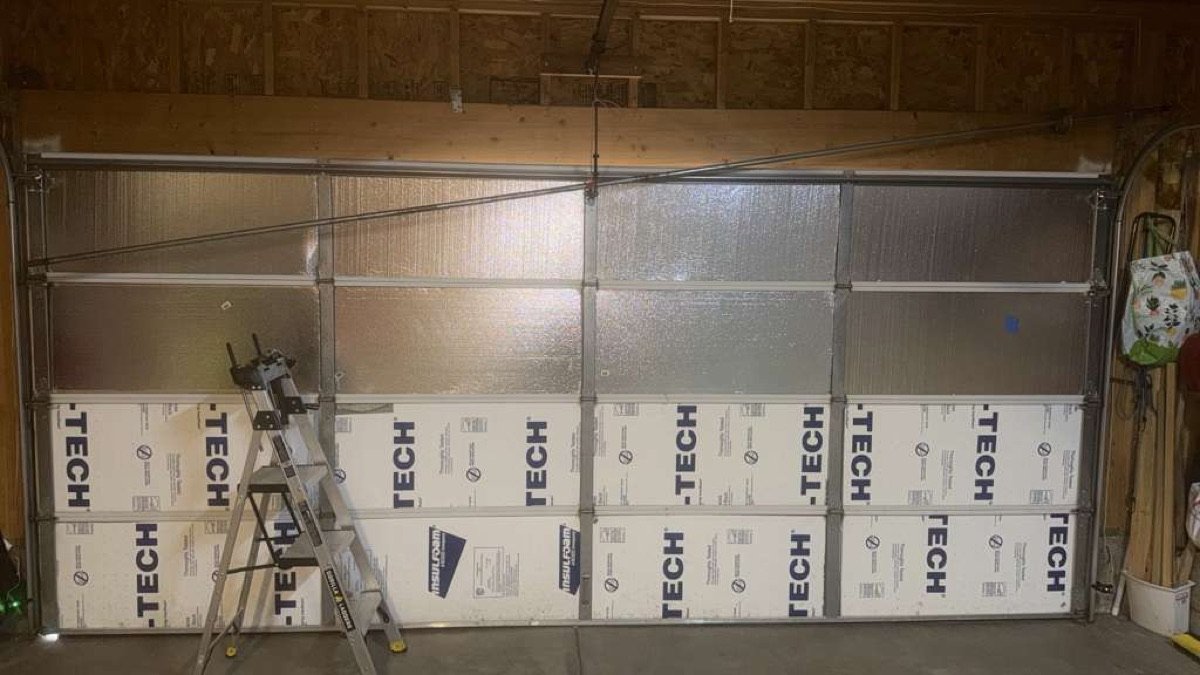
For Boulder-area properties, the useful question is not simply whether a door is labeled insulated. It is which rating is being shown, how the complete section is built, and whether the installed door closes evenly against the floor and perimeter seals.
R-value and U-factor describe different things
R-value describes resistance to heat flow; a higher value indicates more resistance under the test method used. U-factor describes heat transfer through an assembly; a lower value indicates less transfer. They are related, but a manufacturer rating for a panel should not be treated as a guarantee for the entire garage.
When comparing models, ask whether the published number applies to the center of a panel or to the complete assembled door. Also compare the test standard and product construction instead of assuming that two labels were measured the same way.
Panel construction changes more than the rating
- Single-layer doors use one exterior skin and leave the interior structure exposed.
- Two-layer doors add insulation behind the exterior skin.
- Three-layer doors place insulation between exterior and interior skins, creating a finished interior surface.
Thickness, reinforcement and section design can also affect how a door feels and sounds during operation. Those characteristics should be evaluated with door weight, spring sizing and opener capacity. Adding material to an existing door changes weight and should not be done without checking the counterbalance system.
Seals and fit are part of the thermal boundary
An insulated panel cannot compensate for large gaps around the opening. The bottom seal should follow the floor without preventing the door from closing. Side and top weather seals should contact the door without folding into the track. Gaps around windows and between sections also affect air movement.
Before ordering a door, measure the opening, side room, headroom and backroom. The track configuration and opener rail need enough clearance for the selected door. Our Boulder garage door installation page explains how these parts are considered together.
When insulation may be worth comparing
Owners commonly compare insulated options when the garage is attached to living space, used as a workshop, contains plumbing or has rooms above it. The decision can also involve sound, interior finish and panel rigidity. The actual effect varies with the garage, the rest of the building envelope and how often the door is opened.
Ask for the exact model, construction layers, published rating, window configuration and seal package in writing. That makes it easier to compare two proposals without relying on a single marketing number.
Installation checks after the door is in place
- Confirm that each section moves through the track without rubbing or binding.
- Check that the closed door meets the bottom, side and top seals evenly.
- Verify door balance before reconnecting or testing the opener.
- Confirm opener travel limits and safety reversal with the completed door.
- Review care instructions for the specific finish, windows and seals.
Does a higher R-value always mean the best door?
No. The rating is one comparison point. Construction, fit, seals, windows, hardware, intended use and budget should be considered together.
Can insulation be added to any existing door?
Not automatically. Added weight can change door balance and spring requirements. The existing sections, hardware and opener should be evaluated before material is added.
Will an insulated door make the garage a conditioned room?
No. A garage door is only one part of the enclosure. Walls, ceiling, floor, windows, air leakage and heating or cooling equipment also affect indoor conditions.