
A damaged garage door panel does not automatically mean the entire door must be replaced. The right decision depends on where the damage is, whether the section still holds its shape, how the door moves, and whether a compatible replacement section is available.
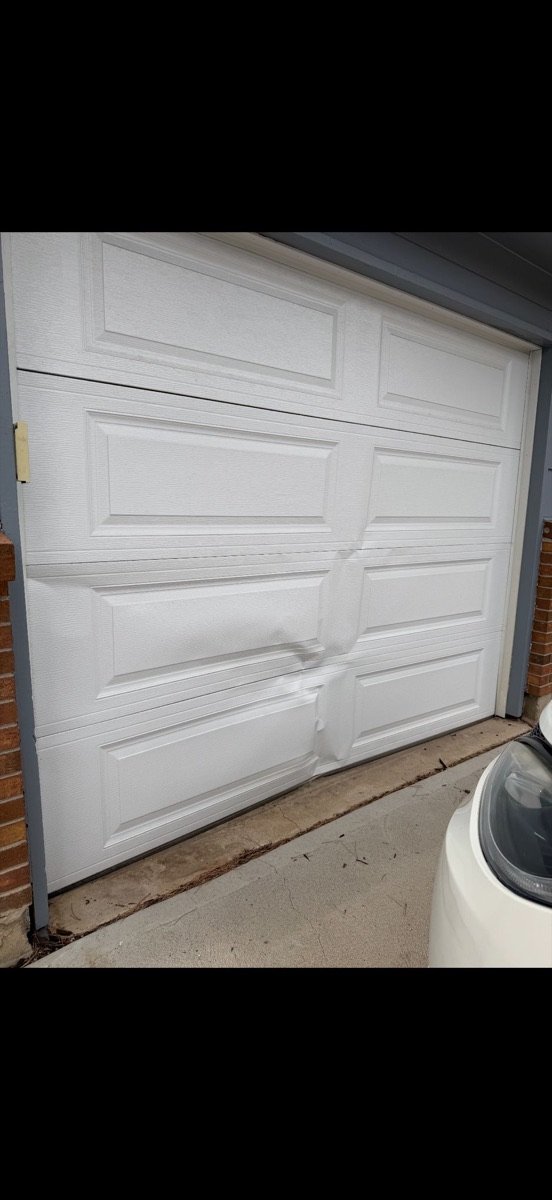
Photos are useful for showing the extent of a dent or bend, but they cannot confirm the condition of the hardware behind the door. A safe evaluation looks at the complete moving system before comparing panel repair, section replacement and full door replacement.
Start with the type and location of the damage
Cosmetic dents, deep creases and structural bends affect a sectional door differently. A shallow dent may change only the appearance. A crease near a hinge or edge can change how the section carries force as the door curves through the track. Damage across several sections can also prevent the door from staying square in the opening.
- Surface dent: the skin is marked, but the section may still be straight and stable.
- Edge or hinge damage: fasteners may no longer sit correctly, which can affect movement between sections.
- Split, cracked or folded section: the panel may flex as the door opens and closes.
- Multiple damaged sections: repair costs and part availability should be compared with a complete replacement.
When replacing one section may be practical
A single-section replacement can be worth considering when damage is limited, the remaining sections and hardware are in serviceable condition, and a compatible panel can be identified. Compatibility includes the section profile, thickness, height, hinge placement, finish and connection points. A panel that looks similar from the driveway may not connect correctly to the existing door.
Color also changes with age and exposure. Even when the correct factory finish is available, a new section may not visually match older sections exactly. That appearance difference should be discussed before parts are ordered.
When full door replacement deserves comparison
Replacement becomes a stronger option when several sections are bent, the door has lost its shape, compatible sections are unavailable, or the existing system has additional wear that would remain after a panel-only repair. It can also make sense when the owner already plans to change the door style, insulation level or window layout.
The comparison should include more than the visible door face. Track layout, spring sizing, opener compatibility, headroom and the condition of supporting hardware all affect the scope. See the garage door installation service and the installation planning guide for those details.
What a panel-damage inspection should check
- Whether the opening is stable and the door can remain safely in its current position.
- Whether damaged sections are rubbing, folding or pulling hardware out of alignment.
- Hinges, rollers and tracks near the impact area.
- Door balance and spring support without relying on the opener to force movement.
- Panel identification and availability before a section replacement is recommended.
- Final travel, balance and opener reversal after the selected work is complete.
Questions to ask before choosing
Can every dented panel be repaired?
No. The depth, location and shape of the damage matter, as do the construction of the section and the condition of nearby hardware. Inspection is needed before deciding whether cosmetic work, section replacement or full replacement is appropriate.
Will a replacement panel match the rest of the door?
The profile and dimensions must match for safe operation. The color may still differ because the existing sections have aged and been exposed to outdoor conditions.
Can the opener straighten a damaged door?
No. The opener is designed to move a properly balanced door, not force bent sections or misaligned hardware through the tracks.